img2.ai
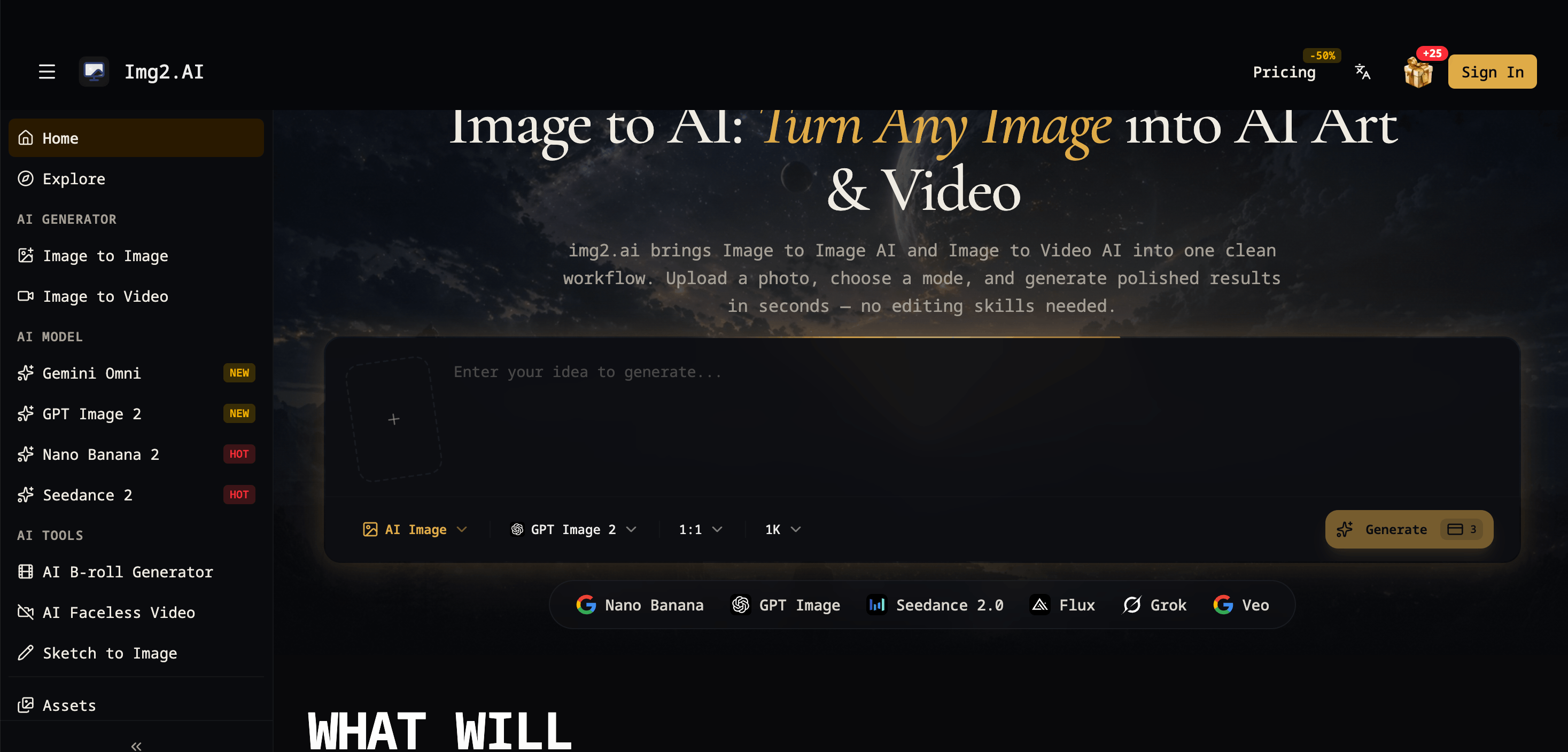
« Image-to-image and image-to-video AI generation in one clean workflow. »
img2.ai: Turning Photos Into AI Art and Video in One Workflow
img2.ai is an AI creative tool built around a simple idea: start with an existing image rather than an empty prompt box. The platform combines image-to-image AI and image-to-video AI into a single, clean interface, letting users upload a photo, choose a mode, and generate a new image or short video clip in seconds without needing traditional editing skills.
Where many AI generators are built primarily around text prompts, img2.ai leans into transforming something a user already has, whether that's a personal photo, a product shot, or a sketch, into a new visual or a short piece of motion content.
Core Features
Image to Image AI
img2.ai's image-to-image tool lets users transform a single photo into a new image in a different style, creating clean variations, changing the overall mood, or generating stylized AI art while keeping the main subject recognizable and consistent.
Image to Video AI
Alongside image editing, img2.ai can animate any static photo into a short video clip, adding smooth motion and natural camera movement so users can turn a still photo into a moving visual without filming original footage.
Text to Image and Text to Video
In addition to its image-first workflows, img2.ai supports generating fresh visuals and short video clips directly from a text prompt, giving users flexibility to start from either an existing photo or a written idea.
Image Upscaler
img2.ai includes an AI image upscaler that improves image quality with one click, sharpening details and cleaning up resolution so an image can be exported at higher quality.
Multiple AI Models
img2.ai gives users access to a range of underlying models for generation, including options like Nano Banana, GPT Image, Seedance 2.0, Flux, Grok, and Veo, letting them choose the engine best suited to a particular style or use case.
Pricing
img2.ai follows a freemium approach, letting users try its image-to-image and image-to-video tools before upgrading for higher usage limits and access to premium models.
Who Uses img2.ai?
img2.ai is aimed at everyday creators who want to transform their own photos rather than generate images entirely from scratch, including social media users looking for a quick stylized version of a personal photo, small business owners wanting fresh product visuals, and casual users experimenting with turning static images into short animated clips.
Frequently Asked Questions
What is img2.ai used for?
img2.ai is used to transform existing photos into new AI-generated images or short videos, as well as to generate fresh visuals directly from text prompts.
Is img2.ai free to use?
img2.ai offers a freemium model, letting users try image-to-image and image-to-video generation before upgrading for higher limits and premium models.
Do I need design skills to use img2.ai?
No. img2.ai is built around a simple upload-and-generate workflow that doesn't require editing or design experience.
Can img2.ai turn a photo into a video?
Yes. img2.ai's image-to-video tool animates a static photo into a short video clip with smooth, natural motion.
Can I use img2.ai's outputs commercially?
Usage rights depend on img2.ai's terms of service; users should review the platform's terms before using generated images or videos commercially.
How can I contact img2.ai with questions?
img2.ai provides a support contact through its terms of service page for users who have additional questions about the platform.
Why Start From an Image Instead of a Blank Prompt?
Writing a text prompt that captures every detail of a desired image, exact pose, lighting, composition, and subject, can take real trial and error, especially for someone who already has a specific photo in mind. img2.ai's image-first approach sidesteps that problem: instead of describing a scene from scratch, users can upload the actual photo and let the AI transform it, keeping the original composition and subject while changing the style, mood, or format.
This matters most for personal and product photography, where the goal usually isn't to invent something entirely new but to reimagine something that already exists, turning a plain product photo into a more polished visual, or a casual portrait into a stylized piece of art, without losing the identity of the original subject.
How is img2.ai different from a text-to-image generator?
While img2.ai supports text-to-image and text-to-video generation, its core differentiator is the image-first workflow: transforming an uploaded photo into a new image or animating it into video, rather than requiring users to describe a scene entirely in words.
By offering a choice of models like Nano Banana, GPT Image, Seedance 2.0, Flux, Grok, and Veo within a single upload-and-generate flow, img2.ai also removes the need to compare and sign up for multiple separate AI providers just to find the right style match for a given photo. That consolidation is particularly useful for users who want to experiment with several different transformations of the same source image without repeating the upload process across different tools.
The image-to-video feature also gives static content a second life: a product photo, a portrait, or an illustration can be turned into a short, moving clip suited for social feeds, without needing any video filming or animation software.
For small businesses managing their own social channels, this can be an efficient way to refresh existing product or lifestyle photography into new formats without a dedicated video production budget.
Combined with the built-in upscaler for cleaning up resolution, img2.ai covers a fairly complete loop of transform, animate, and refine, all from a single uploaded photo, without requiring users to bounce between separate specialized tools for each step.
That end-to-end simplicity is likely img2.ai's main appeal for casual creators who want quick, polished results without a steep learning curve.
As the underlying model lineup continues to expand, img2.ai's single-hub approach should keep saving users the trouble of tracking down separate access to each new image or video model individually.
For most casual users, that means one login and one workflow to remember, rather than a growing list of bookmarked AI tool websites.
That practical convenience is a big part of why image-first AI platforms like img2.ai continue to find an audience alongside larger, prompt-first generators.
« Browse AI image prompts and generate your own with GPT Image 2 and Nano Banana. »
Freemium« Train custom LoRAs and generate consistent AI images and videos from them. »
Free Trial« Turn text prompts into images using GPT Image 2, Imagen 4 Ultra, and other leading AI models. »
Free Trial« Free AI image generator powered by FLUX and Stable Diffusion, no sign-up needed. »